Part 7- Jefferson County: "Stuck by Design"

Part 7: Short-Term Rentals, Second Homes, and Scarcity
If you feel like every cute house in your neighborhood has quietly turned into a vacation rental, you’re not imagining it. Over the past decade, Jefferson County has layered a tourism and second-home economy on top of an already tight housing supply. The result is fewer homes available for people who want to live here year-round—even as listings and visitor spending grow.
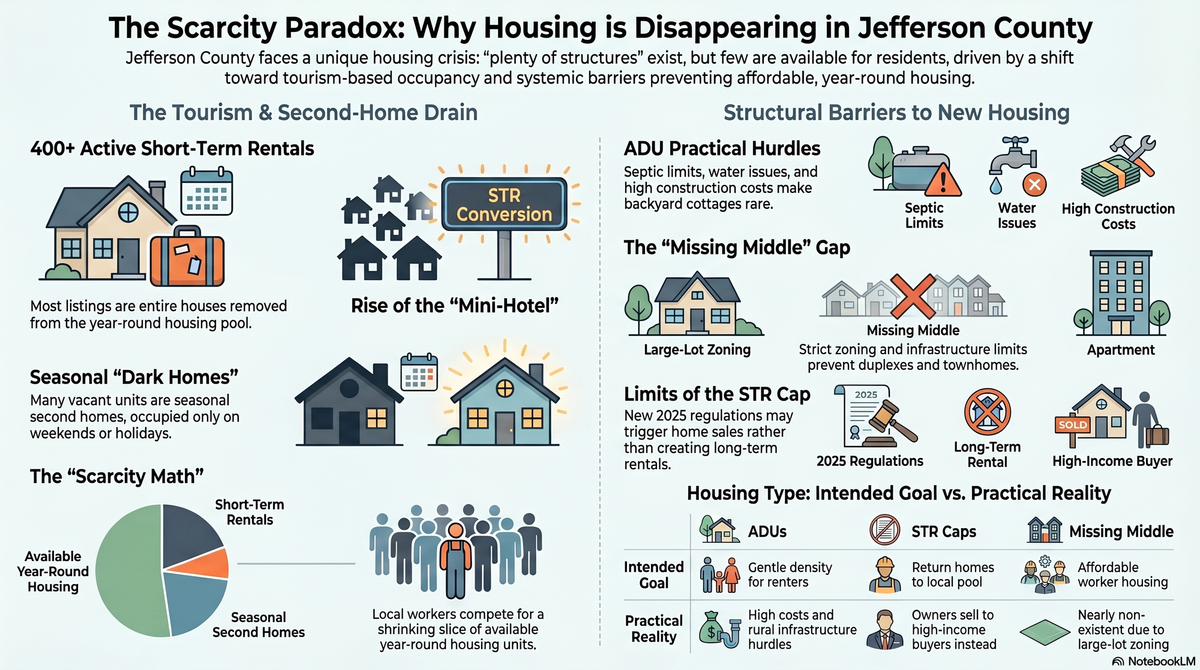
County data shows roughly 400-plus active short-term rentals operating here, plus hundreds more that have historically flown under the radar. Most of them are “entire place” listings, not just spare bedrooms. Each one of those is a whole house that could be part of the year-round housing pool, but instead functions like a mini-hotel.
While short-term rentals are the most visible piece of this shift, second homes operate more quietly but at a similar scale.
Second homes follow a similar pattern. In the unincorporated areas, a majority of vacant units are classified as seasonal or recreational. That works out to a noticeable share of the total housing stock being used primarily as vacation places or second homes rather than full-time residences. On paper those homes exist; on the ground they’re dark much of the year or occupied only on weekends and holidays.
From the street, these neighborhoods can look calm and well-kept: a few lights on, a few cars on big weekends, nothing obviously “wrong.” For renters and would-be buyers, the math is different. They are competing for the smaller slice of homes that are actually in the year-round pool after short-term rentals and second homes have taken theirs. In a county that already builds fewer units than it needs each year, that carve-out produces a very real sense of scarcity.
A cap that doesn’t guarantee more rentals
In 2025 the county adopted new rules to keep short-term rentals from expanding indefinitely: a percentage cap by ZIP code, annual permits, and a one-permit-per-operator limit. On paper, it looks like a firm lid on the STR market.
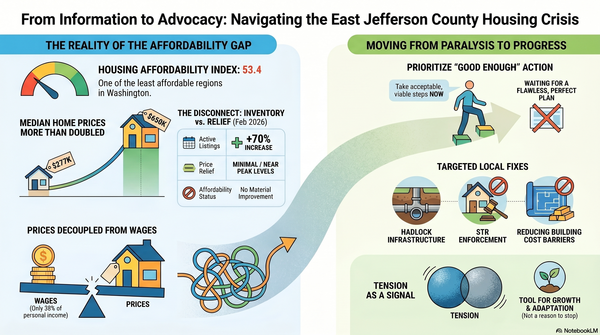
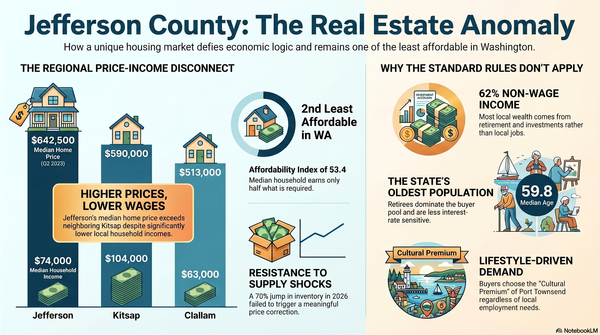
In practice, a cap by itself does not guarantee that capped-out STRs will become long-term rentals. Some owners facing the loss of lucrative nightly income will choose to sell instead of switching to a traditional lease. In a market where prices have more than doubled over the last decade—and remain out of reach for many local wage earners—those units usually come back as high-priced homes for sale, not attainable rentals. STR rules can change how a unit is used without necessarily making it available to local renters.
ADUs: legal, but rare and expensive
Accessory Dwelling Units (ADUs) are often held up as a gentle way to add housing in existing neighborhoods: a garage apartment here, a backyard cottage there. On paper, ADUs are allowed in the county; in practice, very few have been built in rural areas.
The reasons are mostly practical. Rural ADUs face the same hurdles as any rural construction project: septic capacity limits, water issues, and high all-in building costs. By the time you’ve paid for design, site work, utilities, and construction, even a small ADU can be expensive enough that it requires a high rent to pencil out. Many homeowners who might be philosophically open to adding an ADU simply can’t justify or finance the cost.
That leaves ADUs in a paradoxical spot. They are a flexible concept that could, in theory, add small long-term rentals without dramatically changing neighborhood character. Yet in a high-cost, rural setting like Western Jefferson County, they have remained rare, and when they do appear, they are not guaranteed to be affordable.
The missing middle that never arrived
“Missing middle” housing—duplexes, triplexes, fourplexes, small courtyard apartments, rowhouses—fills the space between detached homes and big apartment buildings. In many communities, this is where teachers, healthcare workers, and service-industry households find something modestly priced that still feels like a home.
In Western Jefferson County, very little of this has been built. New construction in unincorporated areas has mostly been single-family detached homes, while small multifamily projects are nearly nonexistent. Large rural lots, strict rural-density zoning, and infrastructure limits make it hard to build anything other than one house on several acres outside the urban growth areas. Inside those growth areas, long-running sewer and planning delays have slowed the pace at which modest-scale housing can realistically come online.
That leaves households with an all-or-nothing choice: stretch for a detached home at today’s prices, or compete for a small, aging pool of rentals and apartments. For many working households, neither option fits. The “middle” product that might work for them simply isn’t present in meaningful numbers.
Causes, not culprits
Short-term rentals, second homes, the limits of the STR cap, the rarity of ADUs, and the absence of missing-middle housing are all part of the reason Jefferson County’s housing market feels so tight. Each is tied to larger forces: a strong tourism and retirement economy, rural infrastructure constraints, and long-standing land-use rules. None of them alone “caused” the housing crisis, but together they help explain how a place can have plenty of structures on the ground and still feel, to the people who live and work here, like there’s nowhere to live.